

-
Ligue para nós
0086 13559245184 -
envia-nos um email
sales@fortunepart.com
Ligue para nós
0086 13559245184envia-nos um email
sales@fortunepart.com
Aug, 2026
Os problemas comuns de desgaste do material rodante, se detectados precocemente, custam de 40 a 60% menos do que uma substituição completa. O material rodante é o componente mais caro. Um rolete da esteira desgastado pode levar a uma reconstrução de US$ 6.000. Os cinco principais sinais de alerta são:chassi de escavadeirapeçasIncluem-se sinais de tensão anormal nos trilhos, desgaste nos dentes da roda dentada, roletes trincados, peças soltas e ruídos incomuns. Ignorar esses sinais leva a falhas catastróficas e a custos elevados de inatividade. Este guia oferece uma abordagem prática para identificar esses problemas precocemente.
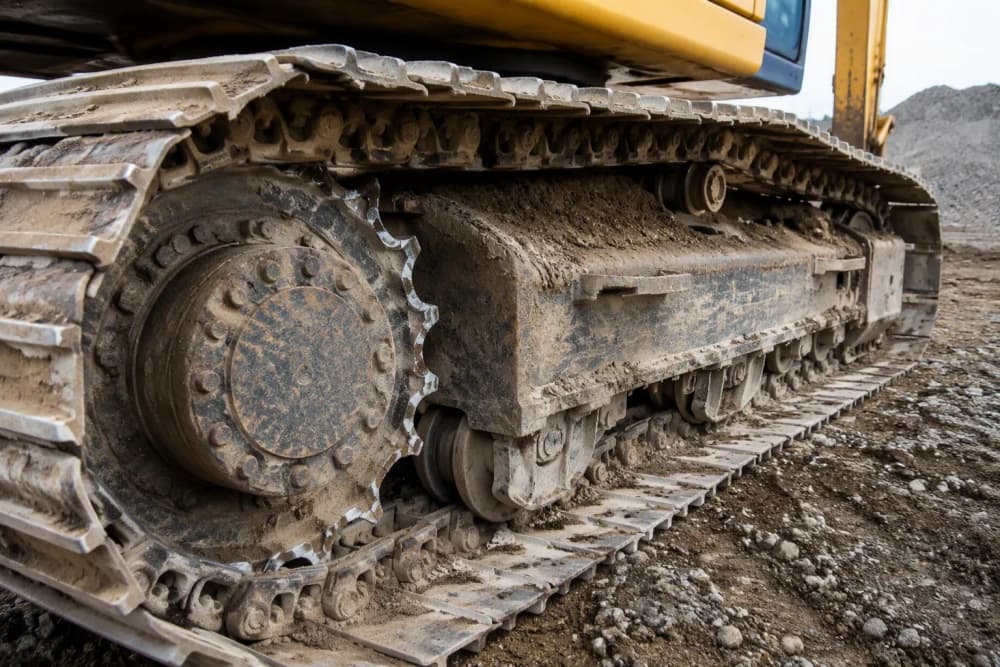
Inspeções visuais diárias detectam sinais precoces como folga nos trilhos, rachaduras e parafusos soltos.
A tensão correta da esteira evita o desgaste acelerado das rodas dentadas e dos roletes guia.
Ruídos metálicos incomuns, como rangidos ou atritos, indicam contato metal com metal.
Utilize medidores de desgaste para medir com precisão os dentes da roda dentada e os flanges da roda guia.
A limpeza e lubrificação regulares removem detritos e reduzem o atrito.
Um dos primeiros indicadores visuais de desgaste do material rodante é a folga da esteira. Conforme a corrente se estica, a esteira fica mais baixa do que o normal. Você pode medir a folga verificando a distância entre a esteira e a parte inferior do veículo.rolete de transporteEm uma escavadeira típica de 20 toneladas, a flecha geralmente fica entre 35 e 45 mm, embora os valores exatos dependam da marca e da aplicação de trabalho. Ultrapassar essa faixa indica alongamento da corrente.
É possível identificar o alongamento da cadeia observando estes indicadores:
Alongamento do passo superior a 2%: um indicador de alta severidade que exige a substituição de todo o conjunto.
Placas de elos trincadas, especialmente perto dos pinos de fixação: exigem a substituição imediata da corrente.
Padrão em forma de barbatana de tubarão nos dentes da engrenagem: Indica desgaste avançado e é um sinal visual direto de alongamento da corrente.
A substituição da corrente é necessária quando o alongamento do passo excede 2% das especificações originais — este é um indicador fundamental para evitar danos à roda dentada e manter a operação segura.
Os parafusos das sapatas da esteira são cruciais para a integridade estrutural. Um parafuso quebrado ou ausente não só enfraquece a sapata, como também pode causar danos maiores se o problema não for resolvido.
Os parafusos são essenciais para manter suas máquinas unidas. Se estiverem faltando, quebrados ou danificados, é sinal de que talvez seja hora de substituí-los. Isso compromete a integridade estrutural do seu equipamento e pode representar um risco à segurança.
Os principais sinais de problemas de hardware incluem:
Parafusos ausentes ou soltos: Essa condição pode levar à instabilidade e ao aumento do desgaste de outros componentes.
Inspecione os parafusos da esteira a cada 500 horas ou mensalmente. Use uma chave dinamométrica para verificar o aperto. Aperte-os imediatamente se detectar qualquer folga.
Rachaduras em roletes e rodas-guia são um sinal claro de fadiga do material rodante. Você pode identificar essas rachaduras durante inspeções diárias. As causas comuns incluem:
Fadiga do metal devido a ciclos repetidos de tensão
Tensão inadequada
Acúmulo de detritos e lama
Superaquecimento e temperaturas extremas
Contaminação de fluidos e níveis baixos
Impacto de pedras ou buracos
defeitos de fabricação
Corrosão causada por água salgada ou exposição a produtos químicos.
A tensão da esteira é o ajuste mais importante que você controla em sua máquina. A tensão inadequada é a principal causa de falhas prematuras em componentes do material rodante. Ao ajustar a tensão incorretamente, você acelera o desgaste em todo o sistema. A relação entre a tensão e a vida útil dos componentes é direta e mensurável.
O aperto excessivo cria pressão excessiva em todas as peças móveis. Você força as buchas da esteira contradentes da roda dentadacom um aumento drástico da pressão de contato. Essa pressão gera um atrito enorme, que produz acúmulo de calor e desgaste acelerado. Os rolamentos da roda guia dianteira são os mais afetados. A alta tensão constante os submete a estresse e atrito excessivos, reduzindo diretamente sua vida útil.
Uma tensão mais elevada na esteira leva a um maior desgaste das rodas dentadas, enquanto uma tensão mais baixa (menor carga) leva a um menor desgaste.
É possível identificar a tensão excessiva através de vários sintomas observáveis:
Rasgos e deformações nas bordas externas.
Perda de energia durante a operação
Desgaste excessivo do rolamento intermediário
Aumento das vibrações, especialmente em terrenos acidentados.
Ausência de folga visível (as esteiras parecem esticadas e tensas)
Tração reduzida em terrenos macios ou lamacentos.
Maior consumo de combustível devido ao aumento da resistência ao rolamento
O indicador mais confiável continua sendo a folga da esteira. Quando a folga medida for menor que o valor especificado no seu manual de serviço, suas esteiras estão com tensão excessiva. Você deve liberar a graxa do cilindro tensionador para corrigir essa condição.
A subtensionamento apresenta um conjunto de problemas igualmente perigosos. Esteiras frouxas não conseguem engatar corretamente nos dentes da roda dentada e nos flanges dos roletes. Esse engate inadequado causa lascamento e padrões de desgaste anormais nos dentes da roda dentada. A esteira pode escapar das rodas dentadas de acionamento, levando a um desgaste mais rápido dos componentes.
Esteiras muito apertadas causam pressão excessiva nos componentes, acelerando o desgaste. Esteiras frouxas podem escapar das rodas dentadas de acionamento, levando a um desgaste mais rápido dos componentes.
A consequência mais grave da subtensão é o descarrilamento. A folga excessiva da esteira faz com que ela se desloque diretamente da roda guia dianteira ou suba sobre a roda dentada durante curvas, cargas laterais ou operações com a lâmina. O risco aumenta significativamente durante a operação em marcha à ré. Aproximadamente 75% dos elos da esteira permanecem sob contato, carga e movimento simultâneos entre a parte inferior da roda guia dianteira e o primeiro elo engatado pelo dente da roda dentada.
Diversas condições contribuem para a subtensão:
Vazamentos nos retentores de óleo do cilindro tensionador causam perda de pressão hidráulica.
Uma mola quebrada no dispositivo de tensionamento impede que ele mantenha a tensão adequada.
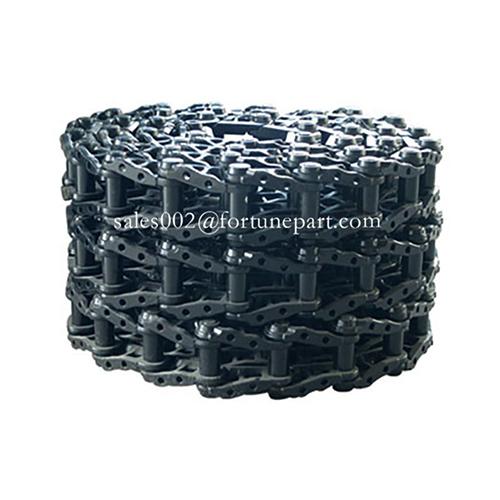
Conjuntos de pinos e buchas desgastados nos trilhos da corrente.
A folga excessiva nos trilhos é uma causa direta de descarrilamento. Embora a tensão seja normalmente ajustada por meio do cilindro de tensionamento com uma pistola de graxa, se os trilhos não puderem ser tensionados mesmo após a aplicação de graxa, o problema subjacente pode ser o desgaste dos pinos e buchas nos trilhos da corrente. Uma vez que esses componentes estejam desgastados, um simples ajuste de tensão não resolverá o problema, e o conjunto do trilho da corrente poderá precisar ser substituído.
Para medir com precisão a curvatura da esteira, é necessário um método sistemático. Estacione a escavadeira em um terreno plano. Posicione a esteira de forma que a área entre a roda guia dianteira e o primeiro rolete de apoio fique no ponto mais baixo. Coloque uma régua sobre a parte superior da esteira. Meça a distância vertical da régua até o topo do elo da esteira.
Compare sua medição com a especificação no manual de serviço. Para uma escavadeira típica de 20 toneladas, a flecha geralmente fica entre 35 e 45 mm. Os valores exatos dependem da marca e da aplicação de trabalho. Se sua medição estiver fora dessa faixa, ajuste a tensão de acordo.
Adicione graxa ao cilindro de tensionamento para aumentar a tensão e reduzir a folga. Remova a graxa para diminuir a tensão e permitir maior folga. Após cada ajuste, opere a máquina brevemente e meça novamente. Repita esse processo até atingir a especificação correta.
A verificação regular da tensão deve ser realizada a cada 250 horas de operação ou semanalmente, o que ocorrer primeiro. A tensão também deve ser verificada após qualquer mudança brusca de temperatura ou após o trabalho em condições extremas. O gerenciamento adequado da tensão previne o desgaste prematuro e prolonga a vida útil de todo o sistema de material rodante.
Os dentes da roda dentada revelam a verdadeira condição de todo o seu sistema de transmissão por esteiras. Quando você vê um perfil afiado e pontiagudo nos dentes, está diante de uma condição chamada "desgaste por lâmina". Essa formação indica que o passo da corrente da esteira aumentou devido ao alongamento. A corrente estica, então os dentes não se encaixam mais perfeitamente nas buchas.
The consequences of thiswearpattern extend beyond the sprocket itself:
Uneven toothwearleads to poortrackengagement and diminished performance.
Worn tooth profiles cause the bushing to slam into the tooth root, generating shock loads that travel back through the final drive.
Once tooth tipwearexceeds 25-30% of original height, engagement becomes sloppy, causing thetrackto pitch and slap.
Asymmetricwearfrom forward and reverse operation impairs the tooth's ability to mesh cleanly, reducing power transfer efficiency.
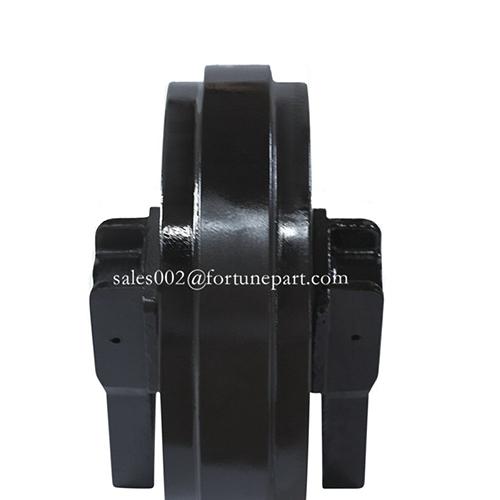
Idlers carry a significant portion of your machine's weight, and their flanges guide thetrackchain along the frame. A misaligned front idler forces the chain to twist and bend as it travels, generating enormous side-loading forces. This unnatural movement concentrateswearheavily on one side of the idler's tread and flange. Adjacent rollers then take on a guiding role they were not designed for, leading to rapid abnormalwear.
An idler can last between3,000 to 5,000 operating hoursdepending on working conditions, maintenance practices, and material quality. This range applies to generalwearthat includes flange degradation.
Cracks on idlers signal metal fatigue from repeated stress cycles. You should inspect flanges for thinning edges and check the tread surface for flat spots. Both conditions shorten component life and compromise yourexcavator's stability.
Visual inspection alone cannot give you precise data. You need calibrated tools to measurewearaccurately. Precision calipers, either digital or vernier, serve as the primary tool for measuring sprocket toothwear. The measurement method involves checking from the base of the tooth pocket to the tip of the tooth. You then compare this value against the manufacturer'swearlimit chart.
For idler flanges, you can use a dedicated flangeweargauge to measure the remaining thickness. Regular measurement every 250 hours helps you trackwearprogression and predict replacement intervals. This data-driven approach prevents unexpected failures and keeps yourundercarriageoperating efficiently.
Your ears serve as powerful diagnostic tools during daily operation. Unusual sounds from the undercarriage often provide the earliest warning of component failure. You must learn to distinguish between normal operational noise and the sounds that indicate serious problems.
Different sounds point to different failure modes. You need to identify each one accurately to diagnose the root cause.
|
Sound |
When It Occurs |
Likely Cause |
|---|---|---|
|
High-pitched squealing |
During turns |
Metal-on-metal contact between worn flanges and track link sides |
|
Loud popping or snapping |
During operation |
Severely worn sprocket engaging with worn bushings, worsened by worn or misaligned rollers |
|
Rhythmic 'clack' |
With each track revolution |
Loose roller or a single severely worn component |
A rhythmic clack that repeats with each revolution demands immediate investigation. This sound typically indicates a loose track roller or one severely worn component. You should stop the excavator and inspect the affected area before continuing work.
A loose track produces a distinctive slapping or flapping sound as it contacts the rollers and idlers. You might hear a dull thud each time the track loses proper engagement with the drive sprocket. This noise often accompanies visible track bounce during operation.
When you hear this sound, check your track tension immediately. A slipping track accelerates wear on bushings, sprockets, and rollers. You risk derailment if you continue operating under these conditions.
Increased vibration through the cab provides a direct symptom link to track roller issues. Uneven roller wear causes this vibration, and that uneven wear may signal misalignment of tracks. Machines with worn rollers begin to ride rough and exhibit excessive track bounce.
The mechanism works as follows:
Track-excited vibration represents the most common vibration in tracked machines, generated by contact between track links and rollers.
Roller frame, idler, and sprocket alignment problems unevenly affect chain rollers, leading to uneven wear patterns.
This uneven wear produces a saw-pattern on track links, directly contributing to increased vibration.
The vibration transmits through the machine structure to the cab, becoming quite relevant when working on a smooth surface.
You should investigate any new vibration that appears during normal operation. Check for misalignment of tracks and inspect your track rollers for uneven wear patterns. Early detection prevents costly damage to your entire undercarriage system.
A structured maintenance routine protects your undercarriage investment. Daily checks, proper cleaning, and timely professional service prevent the small issues that grow into expensive failures. The cost of a few minutes each day is nothing compared to a $20,000 undercarriage rebuild.
A daily visual inspection takes only ten minutes. Walk around your machine and check these items:
Track tension: verify proper sag adjustment for your current conditions
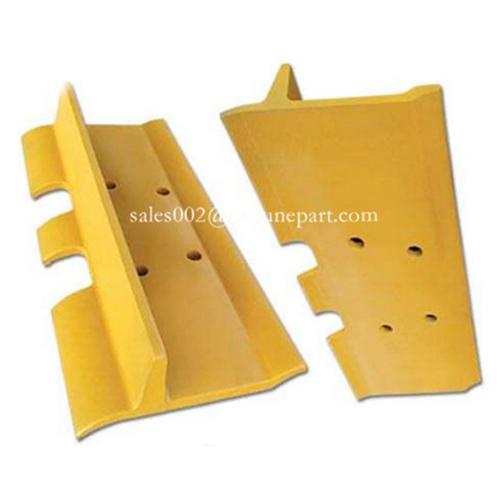
Track pads and shoes: inspect for wear, cracks, missing pieces, or loose bolts
Track links and pins: look for visible wear, seized links, or elongation
Idlers and rollers: check for leaks, damage, bearing play, and seal condition
Sprockets: examine teeth for wear, chipping, or knife-edging
Frame and guards: search for damage, cracks, or misalignment
This checklist covers the most common failure points. Perform it every morning before you start work. A lack of regular maintenance causes 80% of premature undercarriage failures.
Cleaning removes the debris that accelerates wear. Mud, gravel, and clay pack into roller frames overnight. The packed material cures and hardens like concrete. When you move the excavator, these hardened obstructions freeze the top carrier rollers andbottom track rollersin place. Forcing the track to slide over a seized track roller grinds flat spots into the roller shells within days, permanently destroying the components.
If operating in sticky clay, loosen the steel track slightly. Mud packing will naturally tighten the track, so this adjustment compensates for the added tension that accelerates wear.
Regular lubrication of grease points keeps pins and bushings moving freely. Dry joints accelerate wear and create the metal-on-metal contact that destroys components.
Professional inspections catch issues you might miss during a quick walk-around. The frequency depends on your operating conditions:
|
Frequency |
Inspection Type |
Description |
|---|---|---|
|
Daily |
Visual |
Check for immediate issues visible to the operator |
|
Weekly |
Detailed with measurements |
Measure track tension, sprocket wear, and roller condition |
|
Monthly |
Comprehensive maintenance evaluation |
Full assessment including lubrication, alignment, and structural checks |
|
As needed |
Additional detailed inspections |
Required in abrasive environments like rocky, wet, or high-dust conditions |
Call a professional if you notice any of the following: unusual noises that persist, visible cracks on structural components, or measurements that exceed manufacturer wear limits. A trained technician can measure pin and bushing wear with precision tools and recommend the right time for replacement. This proactive approach saves you thousands of dollars compared to emergency repairs.
Uma inspeção diária de 10 minutos evita a necessidade de substituir o material rodante, um custo superior a US$ 20.000. Observe sinais visuais como folga nas esteiras, rachaduras e parafusos ausentes. Preste atenção a indicadores mecânicos, como ruídos e vibrações. Verifique problemas estruturais, incluindo rachaduras na estrutura e vazamento de graxa dos roletes das esteiras. Limpeza regular, tensionamento adequado e lubrificação oportuna continuam sendo as práticas mais econômicas. Essas ações reduzem diretamente o desgaste do material rodante da escavadeira. Em caso de dúvida, meça. Use medidores de desgaste e consulte o manual do equipamento para obter os limites específicos. Essa abordagem protege o investimento na sua escavadeira e prolonga a vida útil dos componentes das esteiras.
Você deve realizar uma inspeção visual todos os dias antes de começar o trabalho. Uma caminhada de 10 minutos ao redor da máquina permite identificar problemas iniciais, como parafusos soltos, folga nas esteiras ou rachaduras. Semanalmente, meça a tensão das esteiras e o desgaste das rodas dentadas com um medidor. Mensalmente, agende uma verificação mais completa.
A tensão inadequada dos trilhos é a principal causa de falhas prematuras. O excesso de tensão acelera o desgaste da roda dentada e da roda guia. A tensão insuficiente leva ao descarrilamento e danos às buchas. Verificações regulares da tensão previnem esses problemas e prolongam a vida útil dos componentes.
Sim, você pode substituir componentes individuais, mas primeiro deve verificar as peças relacionadas. Uma engrenagem desgastada geralmente acompanha uma corrente esticada. Substituir apenas um componente sem verificar o alongamento da corrente pode causar desgaste rápido na peça nova.
Um ruído de atrito geralmente indica contato metal com metal entre buchas desgastadas e os dentes da roda dentada. Você deve parar a máquina imediatamente. Inspecione os dentes da roda dentada e a corrente da esteira para verificar se há desgaste excessivo. Continuar a operação pode causar danos catastróficos.
categorias
recente Postagens
Tag
Xiamen Fortune Industrial Co., Ltd.
Room 402,No.7,Kangleli,Huli District, Xiamen, Fujian, China
Tel : 0086 13559245184
Fax : 0086-592-7072790
Whatsapp/Wechat : +8613559245184
Contact Person: James Xie
O email: sales@fortunepart.com
Microsoft Teams: part-sales
digitalizar para wechat: